
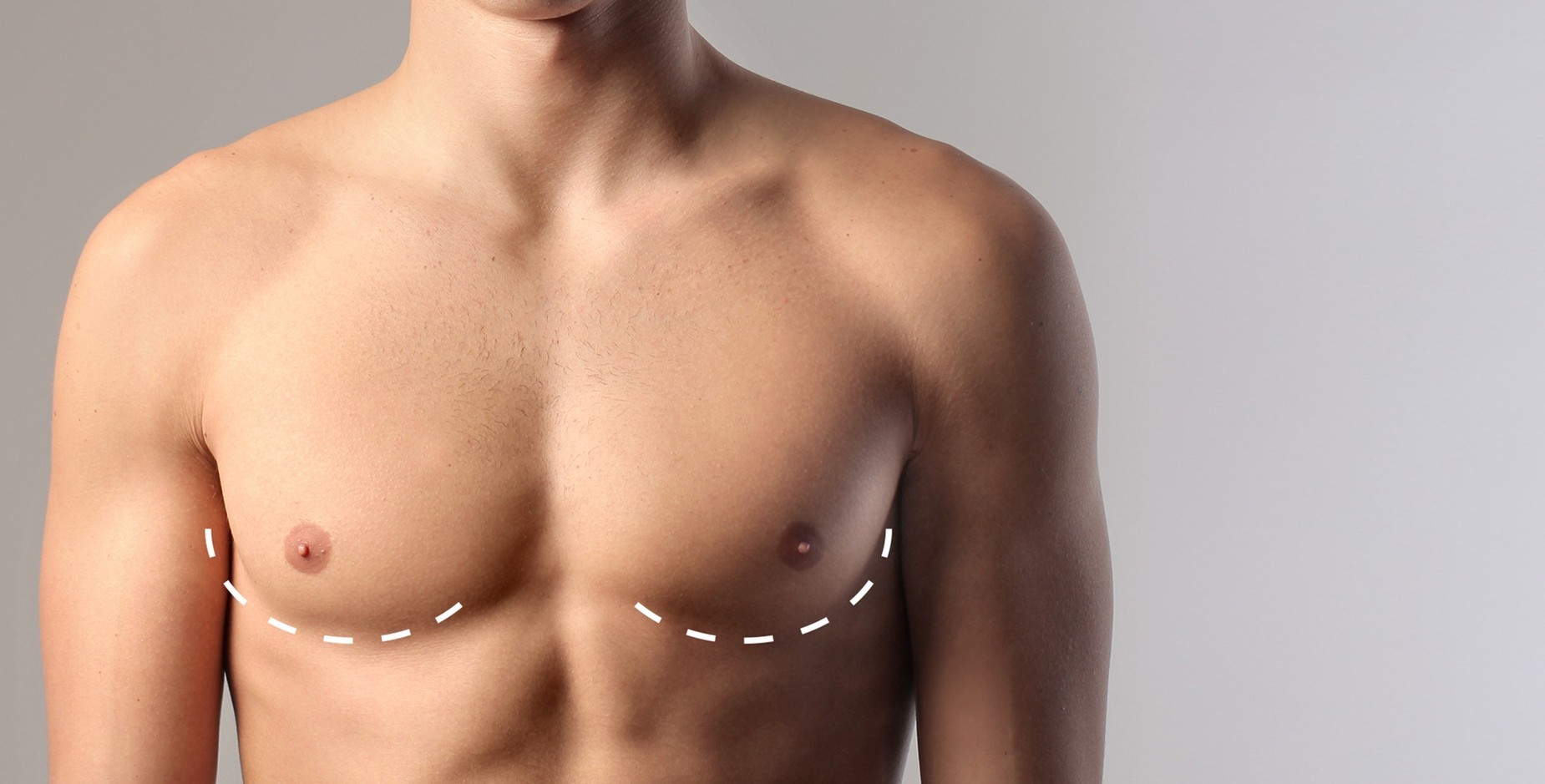
Gynecomastia
Gynecomastia refers to breast enlargement in men. It can affect one or both breasts.
What Causes Gynecomastia?
In 90-95% of cases, no cause is found. Gynecomastia most commonly appears during puberty. There is little structural difference between female and male breast tissue. Both contain fat and gland tissue. The difference lies in hormones. Female hormones have an enlarging effect on breast tissue, while male hormones suppress the estrogen effect.
Adolescent gynecomastia is caused by imbalances in these hormonal effects. Decreased testosterone levels, testicular tumors, adrenal tumors, obesity, kidney failure, thyroid imbalances, liver tumors, alcohol, anabolic steroids and certain medications can cause gynecomastia.
Is Surgery the Only Treatment?
When there is no underlying cause or it is adolescent gynecomastia, treatment is unfortunately surgical. Adolescent gynecomastia regresses spontaneously in 95% of cases within 4 years. Waiting is the best approach to avoid unnecessary surgery. If an underlying cause exists, it should be treated first.
How is Gynecomastia Surgery Performed?
Gynecomastia surgery can be performed under local or general anesthesia. The goal is to reduce the breasts to a size proportionate to the body. Three options are available:
- Liposuction: Removal of fat tissue
- Tissue excision: Surgical removal of gland tissue
- Combined: Both performed simultaneously
In gynecomastia, breast tissue is increased. This may be fat, gland, or both. Fat can be easily removed with liposuction, but gland tissue may not. Liposuction is performed first, and if any gland tissue remains despite good liposuction, it is surgically removed.
Risks of Gynecomastia Surgery
Risks common to any surgery such as infection, bleeding, tissue death and wound opening are very rare. Gynecomastia-specific risks include asymmetry, nipple retraction, visible skin irregularities and insufficient tissue removal. With good planning and experience, these risks are negligible.
Will There Be Scars?
For liposuction, 1-2 incisions of 2-3 mm are made on each breast. These scars become inconspicuous after 3 months. When gland tissue removal is needed, a semicircular incision is made at the lower edge of the nipple. This scar also becomes inconspicuous after 3 months.
Age Limit
Any male who has completed puberty, is bothered by his appearance and has no surgical contraindications can undergo the operation.