
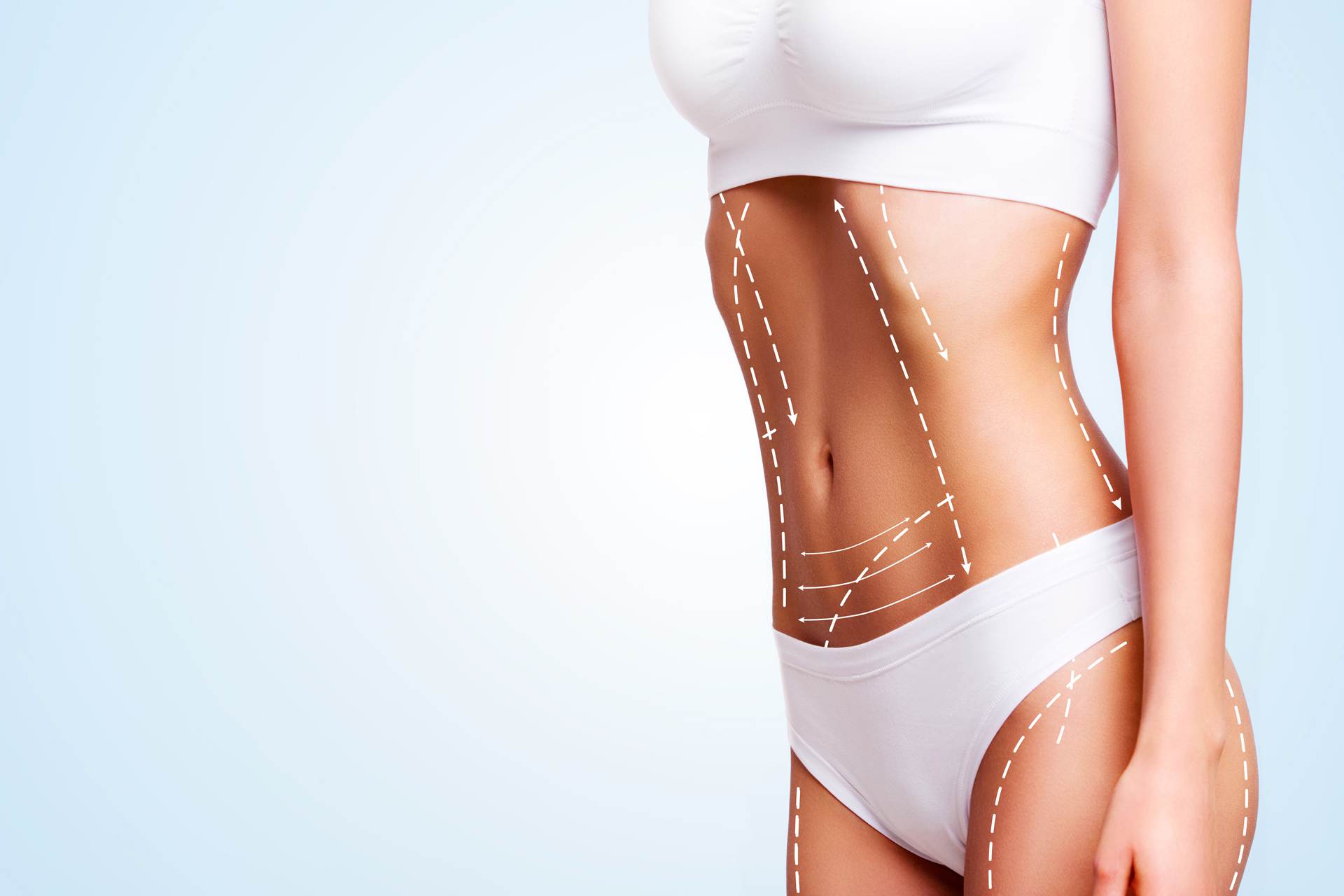
What is Liposuction?
Liposuction is a procedure that removes fat accumulated in specific areas of the body using a thin cannula inserted through a small incision, applying vacuum to extract the fat.
Is Liposuction Risky?
Even the smallest medical intervention carries some risk, however minimal. The important thing is to minimize risks by using current, reliable techniques. With this approach, safe and satisfactory results are achieved.
Which Areas Can Be Treated?
Technically, any area with fat cells can be treated. Liposuction is applicable wherever there is excess or localized fat accumulation. Localized fat deposits are stubborn accumulations that cannot be eliminated despite exercise and persistent diet programs. Common treatment areas include flanks, under-chin, waist, abdomen, hips, upper arms, back, thighs and inner knees in women; and abdomen, chest, under-chin and waist in men.
What is the Purpose?
Liposuction is not performed for weight loss but for body contouring. The goal is to slim fatty areas to create better harmony with other body regions.
How Much Fat Can Be Removed?
Fat removal should not exceed 5-7% of body weight in a single session. Exceeding this limit can cause disturbances in fat metabolism, fluid-electrolyte balance and blood levels. For extensive areas, sessions can be repeated at 3-6 month intervals.
Skin Quality Matters
Skin elasticity is a crucial parameter. As age increases, skin loses elasticity. When fat is removed from under the skin, the skin may become loose. Good skin elasticity is desired for optimal results. For loose, inelastic skin, other methods may be combined.
How is Liposuction Performed?
Performed under local or general anesthesia depending on the area. Special solutions are injected to reduce bleeding, post-operative pain and facilitate fat removal. A cannula is inserted through a 3 mm incision to break down fat, which is then vacuumed into collection containers. Incisions are closed with self-dissolving stitches. A special corset is applied.
Post-Operative Experience
Most patients are discharged the same day or after one day. Pain is not severe and can be managed with oral painkillers. You can walk 1 hour after surgery. Shower is allowed on day 3. Social life can resume in 2 days. Return to work depends on your job type (2-5 days). The corset should be worn for 3-6 weeks. Swelling and bruising are common early on. Bruising typically resolves in 1-2 weeks. Swelling decreases over 2-3 weeks and fully resolves by 3 months.
Will There Be Irregularities?
With an experienced surgeon following basic principles, irregularities, dents and asymmetries should not occur.
What if I Gain Weight After?
Fat cells stop multiplying around age 9-10. After liposuction removes fat cells from an area, they do not regenerate. Weight gained after surgery distributes throughout the body, but treated areas accumulate less since they have fewer fat cells. Therefore, liposuction results are permanent.