
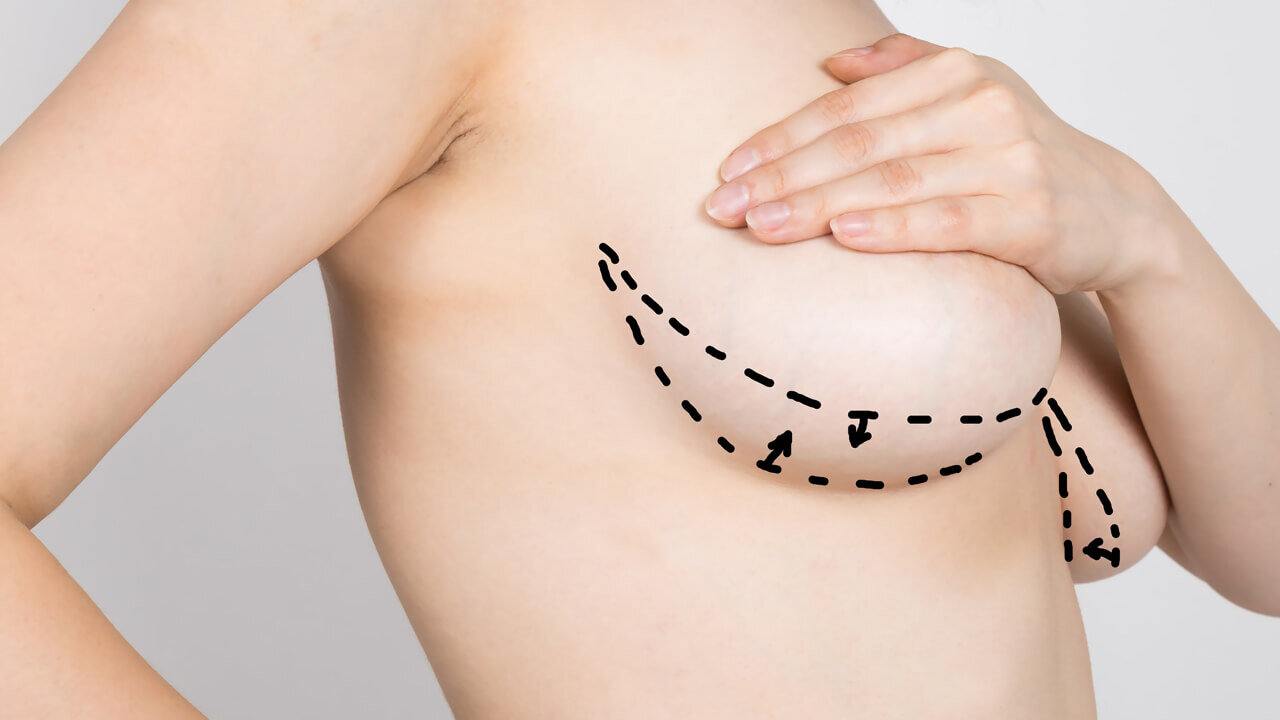
Breast Reduction
Breast reduction surgery is an aesthetic operation performed on large, sagging breasts that have lost their aesthetic structure and negatively affect health due to the extra weight they place on the spine.
What Problems Do Large Breasts Cause?
Large breasts cause significant problems for women. Oversized and heavy breasts distort physical appearance. They cause deformation and herniation in neck and spinal vertebrae, leading to pain. Over time, posture deterioration leads to hunching.
The excessive sweating of the lower breast surface in contact with the abdomen causes frequent rashes and fungal infections. Bra straps leave deep marks on the shoulders. Physical activity is restricted.
Surgical Technique
Different techniques exist for breast reduction. Vertical scar reduction is preferred for suitable patients. However, in cases where vertical scar reduction would produce worse results than inverted-T scar reduction, the inverted-T technique is preferred.
The surgery is performed under general anesthesia and takes approximately 3-4 hours. Detailed planning is done before surgery. The nipple is repositioned to its ideal new location. Excess skin, breast tissue and fat are removed.
Recovery Process
After surgery, a special shaping bra is applied. You stay in the hospital for one day and drains are removed before discharge. You can shower on the 3rd day and your dressing is renewed. Stitches are self-dissolving and hidden, so removal is not needed. The bra should be worn for 3-6 weeks.
After one week, you can return to daily life and non-strenuous work. Light sports can be resumed after the second week and heavy sports after the sixth week.
Will There Be Scars?
Yes, scars will remain. These scars fade over time. Depending on the technique, scars may be in two patterns:
- Inverted-T scar: Around the nipple + vertical line from nipple to lower breast crease + horizontal line in the lower crease
- Vertical scar: Around the nipple + vertical line from nipple to lower breast crease
Breastfeeding
It depends on the surgical technique. Some techniques completely prevent breastfeeding, while others preserve 90-95% of breastfeeding capability. For women who may still have children, techniques that preserve breastfeeding are preferred.
Benefits
After surgery, patients can wear clothes that fit their body. Rashes under the breasts resolve. Pain decreases as the weight on the spine is reduced. Patients become more active, self-confidence increases and psychological well-being improves.